
Email: sdraytan@163.com Tel: 0086-137-3096-1137
Email: sdraytan@163.com Tel: 0086-137-3096-1137
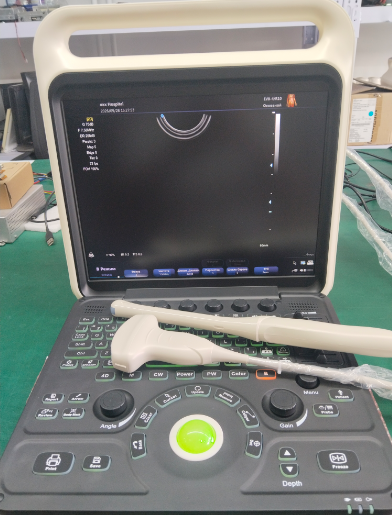
Southeast Asia has a large population base with a growing middle‑class group. Private clinics and specialized outpatient departments have become a vital supplement to local medical services. Unlike large general hospitals, private clinics generally face three practical constraints: limited floor space, controlled budgets, and diverse clinical scenarios.
Portable color ultrasound systems feature flexible deployment, adaptability to fluctuating power supplies, and simple operation & maintenance. They precisely meet such market demands and have become the preferred category for imaging equipment upgrades among local private clinics.
The partner for this project is a local chain private healthcare group, which planned to upgrade imaging departments across its community clinics. After comparing multiple models, the client put forward three core requirements:
Stable imaging performance to support routine diagnostic examinations for abdomen, obstetrics‑gynecology, and superficial tissues;
Complete compliance certifications, with device documentation and certification files meeting local medical device registration requirements;
End‑to‑end delivery: synchronized arrival of the whole batch of devices and unified installation & training without disrupting clinic operation schedules.
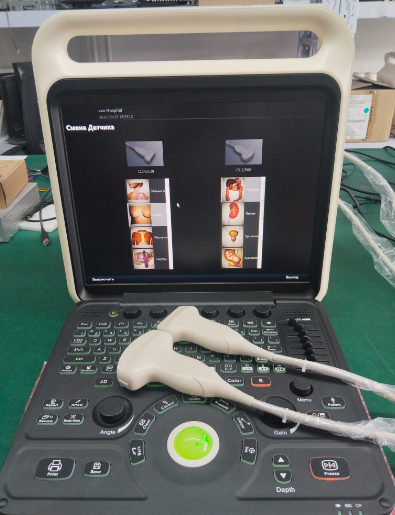
At the initial project stage, business and technical teams held multiple rounds of online communication with the client. Custom probe configuration packages were formulated according to the consultation scope of each clinic.
| Probe Configuration | Covered Clinical Scenarios |
|---|---|
| Convex Probe | Abdominal organs, obstetric prenatal examinations, urinary system examinations |
| Linear Probe | Superficial tissues, thyroid gland, breast, musculoskeletal system, blood vessels |
| Endocavity Probe | Transvaginal gynecological examinations for enhanced specialized diagnostic capacity |
Meanwhile, the technical team reviewed device registration documents, English user manuals, and labels against target‑market access regulations. A full set of customs‑clearing documents was prepared in advance to mitigate common compliance risks for medical device exports.
After order entry into production, each ultrasound unit went through assembly, commissioning and comprehensive factory acceptance tests:
Image calibration and imaging performance testing
Battery endurance and interface stability inspection
Software version and functional module verification
Independent factory test reports issued and filed
Given the hot, humid coastal climate in Southeast Asia and bumpy long‑distance sea transportation, customized moisture‑proof and shock‑resistant export packaging was adopted. The main unit, probes and accessories were fixed in separate compartments wrapped with moisture‑proof films. Outer cartons were marked with moisture‑proof, this‑side‑up and fragile labels, together with fumigation documents for wooden pallets, to minimize damage risks during transit.
The full batch of goods was loaded and shipped on schedule. The logistics team kept track of vessel schedules and port‑arrival updates, and coordinated documentation with local customs brokers in advance to enable fast customs clearance and delivery upon arrival and avoid extra port detention charges.
After goods arrived at each clinic, the technical team delivered on‑demand support via video conference for clinical physicians and equipment maintenance staff in batches.
| Clinical Operation TrainingInstallation & commissioning guidance, probe connection & switching, image parameter adjustment (Gain / TGC / Depth), standard scanning plane operation, measurement and report export | Operation & After‑sales MaintenanceDaily probe care, device cleaning, basic troubleshooting. English‑language operation videos, spare‑parts lists and after‑sales response channels were provided simultaneously |
|---|
All ultrasound systems have been put into clinical service at respective clinics. Client feedback shows that the devices deliver satisfactory image quality for daily diagnosis with user‑friendly operation workflows, well fitting the daily consultation volume of clinics. The pain point of long waiting times caused by outsourcing imaging examinations has been resolved. This batch delivery also lays a solid foundation for future cooperation including clinic expansion and repeat purchases.
Two prominent characteristics of ultrasound procurement by Southeast Asian private clinics were identified in post‑project review:
Buyers are not merely purchasing standalone devices; complete solutions and long‑term after‑sales services — ranging from probe configuration to training support — are critical factors for deal closure.
Any oversight in compliance procedures, packaging, logistics or training may result in delivery delays or return‑shipment disputes. For Chinese‑manufactured portable ultrasound products competing in this market, competitiveness lies not only in cost‑performance but also in exporters’ full‑chain risk control and localized service capabilities.
Supported by our mature medical‑device export delivery system, Raytan provides complete imaging and diagnostic equipment solutions including DR systems, ultrasound scanners and patient monitors for distributors, private healthcare institutions and primary‑care projects across Southeast Asia, Africa, Latin America and other regions. Our services cover model customization, compliance documentation consultation, remote technical training and spare‑parts supply.
We look forward to cooperating with more overseas medical partners to build a stable and reliable medical‑device supply chain.

Contact: Raytan
Phone: 0086-13730961137
Tel: 0086-137-3096-1137
Email: sdraytan@163.com
Add: Langya Port Road, Hi-Tech Development Zone, Qingdao, Shandong Province
We chat
